Moldy films: what can be saved
Mold is one of the most silent and destructive enemies of home cinematic archives. When 8mm or Super 8 films are stored in humid conditions—especially in coastal climates like Málaga—fungi can colonize the emulsion, putting irreplaceable memories at risk. In this guide, we detail the diagnostic process and the real possibilities of recovery.
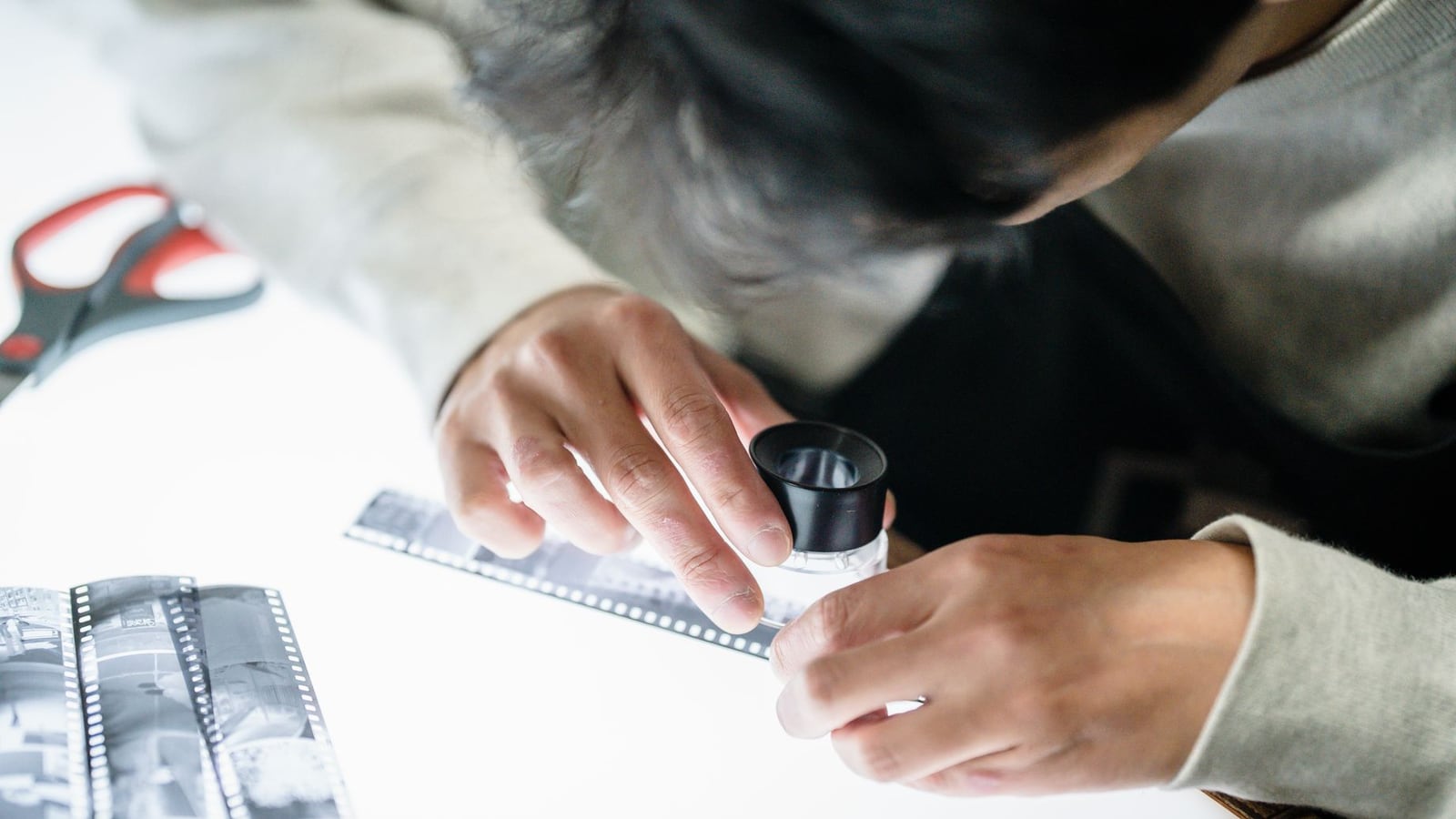
The challenge of the Costa del Sol climate
In Málaga and southern Spain, the combination of high relative humidity and thermal fluctuations creates the ideal environment for fungal proliferation. Films stored in cardboard boxes in humid attics or basements are particularly vulnerable. Mold does not just dirty the image; it feeds on the gelatin that holds the silver halides, which can cause the image to physically detach from the acetate or polyester support.
This biological degradation is often accelerated by the salty air of the Mediterranean, which can penetrate poor-quality storage containers. Once a colony is established, it can spread rapidly through a reel, turning a few affected frames into a total loss if not treated with professional urgency.
How to identify mold in your films
Mold manifests in various ways depending on the species of fungus and the duration of exposure. The most common signs include:
- Whitish or grayish spots with a cotton-like appearance on the surface.
- Small black dots or bright colors (pink or yellow) along the edges of the tape.
- A characteristic smell of dampness or "earth" when opening the storage tin.
- Adhesion between layers: the film feels "sticky," and it is dangerous to attempt to unroll it manually.
What can actually be saved?
The short answer is: almost everything, provided the physical support has not suffered irreversible chemical degradation (such as advanced vinegar syndrome). If the mold is superficial, professional cleaning can remove the spores and stop the spread.
In cases where the fungus has penetrated deeply into the emulsion, "holes" or permanent stains may remain in the final image. However, the priority is to stop the infection to prevent the mold from passing to other films in your collection. The goal of amateur film digitization in critical cases is to capture as much information as possible before the support deteriorates further.
The technical recovery process
The recovery of contaminated material cannot be done at home with common products, as alcohol or unsuitable solvents can melt the film. The professional process follows these strict steps:
- Isolation: The film is processed in a controlled area to prevent cross-contamination of other clients' archives.
- Mechanical and Chemical Cleaning: Specialized solutions are used that eliminate the fungus without attacking the delicate emulsion.
- Stabilization: Humidity is controlled to ensure the support is dry and stable before passing through the scanner.
- Digital Capture: A careful scanning process is used, avoiding excessive friction that could tear away weakened fragments of the image.
Emergency checklist for the owner
| Action | Status | Risk of inaction |
|---|---|---|
| Separate the affected film from the rest of the archive | Urgent | Contamination of other reels |
| Avoid unrolling the tape by force | Critical | Physical breakage of the support |
| Move the archive to a dry, ventilated place | Recommended | Accelerated fungal growth |
| Consult with a restoration technician | Necessary | Total loss of the image |
Prevention and long-term storage
Once the information is rescued through digitization, it is essential to rethink how the originals are kept. We recommend using acid-free polypropylene archive cans and maintaining a constant temperature. In Spain, avoiding unventilated storage rooms (trasteros) is the golden rule for any home cinema collector.
If you have doubts about the state of your tapes, we recommend reading our guide on how to prepare your tapes for digitization to avoid unnecessary risks during transport.
Conclusion and professional advice in Málaga
Do not assume your films are lost just because they show signs of humidity. Current scanning technology and chemical cleaning processes allow the recovery of images that were considered irrecoverable years ago. In our studio in the center of Málaga, we evaluate every meter of film to determine the safest treatment.
If you have detected mold in your archives, the most prudent course of action is to stop manipulating the material and contact professionals. You can request a technical evaluation through our contact page.